Twenty-five hundred years ago, a Chinese military strategist sat down and wrote thirteen short chapters on how to win without destroying yourself in the process.
He probably never imagined his words would end up quoted in NFL locker rooms, Silicon Valley pitch decks, and self-help podcasts. But here we are.
If you’ve ever typed “sun tzu quotes” into Google at 11 p.m. because you’re staring down a tough negotiation, a messy conflict at work, or just a season of life that feels like a fight you didn’t sign up for — you’re in good company.
The Art of War has quietly become one of the most-quoted texts on the planet, not because it’s about war in the literal sense, but because it’s about something almost everyone deals with: competition, strategy, timing, and knowing yourself well enough to act wisely under pressure.
This guide pulls together the most powerful, most misquoted, and most genuinely useful Sun Tzu quotes, explains what he actually meant (because the internet loves to butcher this stuff), and shows you how real people apply these ideas today — in business, sports, relationships, and everyday decision-making.
Who Was Sun Tzu, and Why Does Everyone Still Quote Him?

Sun Tzu was a military general and strategist believed to have lived in China during the 5th century BCE, in the late Zhou dynasty. His book, The Art of War (Sun Tzu Bing Fa), is a compact set of thirteen chapters covering everything from planning and terrain to spies and deception. Historians still debate whether “Sun Tzu” was one man or a compiled body of work from several strategists — but the ideas have outlasted the argument.
- ⚔️ Written over 2,500 years ago yet still assigned reading at West Point and Wharton alike
- 📚 Translated into more languages than almost any other classical Chinese text
- 🎯 Built around the idea that winning without fighting is the highest form of skill
- 💼 Adopted by business schools as a framework for competitive strategy
- 🏈 Quoted by coaches like Bill Belichick and athletes across nearly every major sport
- 🧠 Studied in negotiation training, law enforcement, and conflict-resolution courses
- 🌍 Referenced in political strategy rooms across both Eastern and Western governments
- 📈 Cited in countless startup pitch decks under “market strategy”
- 🎬 Featured directly in films like Wall Street and The Sopranos
- 🧩 Still debated by historians as either one author or a compiled tradition
- 🕰️ Predates most Western military strategy texts by well over a thousand years
- 🧭 Focused less on brute force and more on positioning, timing, and information
- 🤝 Used today in mediation and family conflict resolution, not just war rooms
- 📖 One of the shortest “classics” ever written — under 6,000 Chinese characters total
- 🧑🏫 Taught in leadership courses at Harvard Business School and INSEAD
- 🛡️ Studied by intelligence agencies for its chapters on espionage
- 🎮 Referenced by esports coaches analyzing opponent patterns
- 🧵 Woven into modern books like The 33 Strategies of War by Robert Greene
- 🏛️ Influenced Japanese samurai strategy centuries after it was written
- 💬 Quoted more on LinkedIn than almost any historical figure except maybe Marcus Aurelius
- 🔁 Still relevant because human competition hasn’t fundamentally changed
The Most Famous Sun Tzu Quote of All Time
“Know thyself, know your enemy. A thousand battles, a thousand victories.” This line (often shortened to “know yourself, know your enemy”) is the single most quoted line from The Art of War, and for good reason — it’s the foundation everything else in the book builds on. Self-awareness paired with accurate assessment of the competition, Sun Tzu argued, removes most of the guesswork from any conflict.
- 🪞 Self-knowledge comes first in the quote for a reason — most people skip this step
- 🎯 “Enemy” doesn’t have to mean a person; it can mean a market, a deadline, or an obstacle
- 🧠 Modern psychologists call this concept “accurate self-assessment,” and it predicts success
- 📊 Business strategists use SWOT analysis as a direct descendant of this idea
- 🏆 Athletes who study game film are applying this exact principle
- 💡 Startups that skip competitor research often repeat mistakes competitors already fixed
- 🔍 Self-awareness includes knowing your weaknesses, not just your strengths
- 🗣️ Negotiators use this line to justify pre-meeting research on the other party
- 🧘 Therapists sometimes reference this quote when discussing self-reflection practices
- 📉 Companies that misjudge their own capabilities often overextend and fail
- 🎓 Business schools use this line to open courses on competitive strategy
- 🤔 Misjudging an opponent’s strength is one of history’s most repeated military errors
- 🧭 The quote implies ongoing awareness, not a one-time assessment
- 💪 Confidence built on real self-knowledge tends to outlast confidence built on ego
- 🏅 Olympic coaches often frame training around honest self-assessment first
- 📱 Even social media strategy borrows this logic — know your audience, know the algorithm
- 🧩 It’s frequently misquoted as “know your enemy” alone, dropping the self-awareness half
- 🕊️ Sun Tzu’s larger point: most conflicts are lost before they start, through poor assessment
- 📚 This line alone has inspired entire chapters in modern strategy books
- 🎯 It remains one of the most tattooed quotes from classical literature
- 🌟 Its staying power comes from being true across war, business, sports, and daily life
Sun Tzu Quotes About Winning Without Fighting
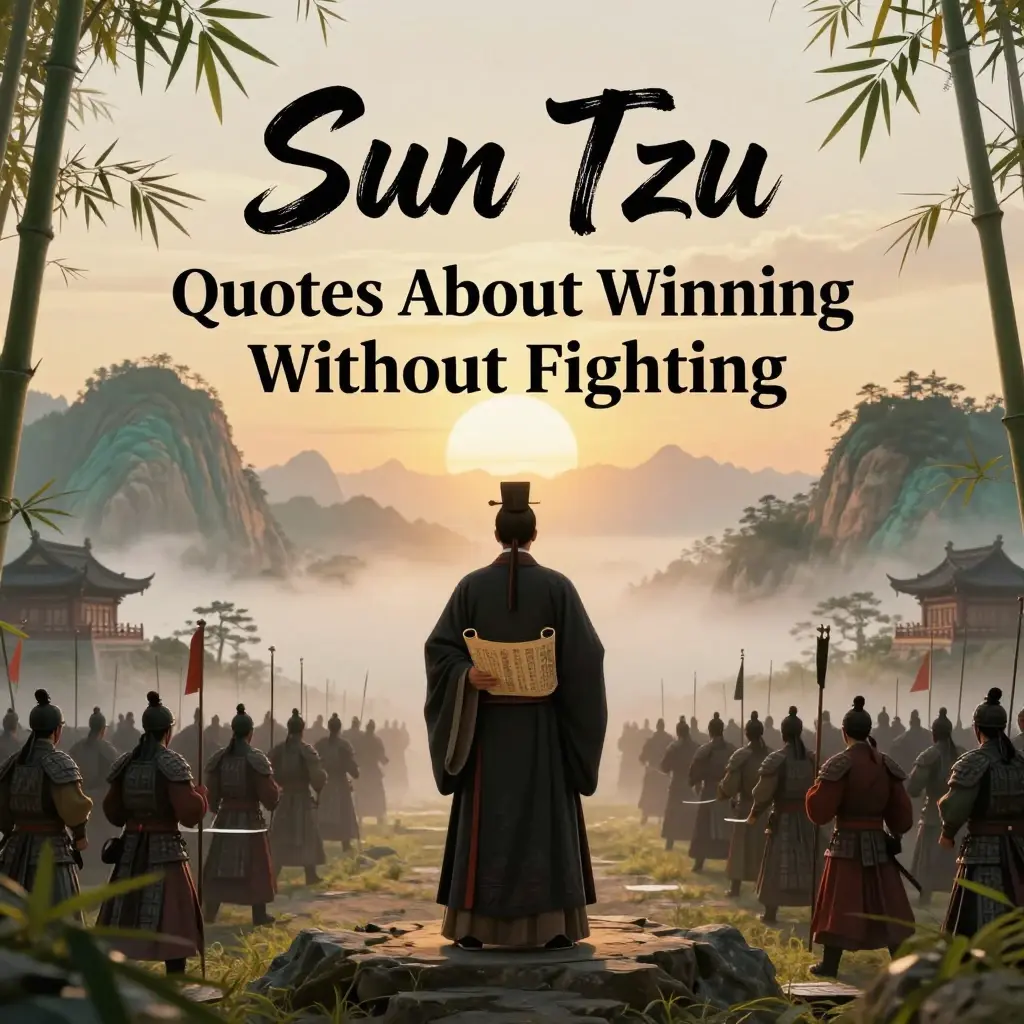
One of the most counterintuitive ideas in The Art of War is that the greatest victories often involve no fighting at all. “The supreme art of war is to subdue the enemy without fighting” isn’t about avoiding conflict out of fear — it’s about recognizing that direct confrontation is usually the most expensive way to win.
- 🕊️ “Supreme excellence consists of breaking the enemy’s resistance without fighting”
- 💰 Fighting is expensive — in war, in business, and in relationships alike
- 🧊 De-escalation is often a strategic choice, not a weakness
- 🏢 Companies that out-position competitors avoid costly price wars entirely
- 🤝 Skilled negotiators aim for agreements where neither side feels forced to fight for terms
- 🎯 Sun Tzu valued positioning so strong that resistance became pointless
- 📉 Businesses that “win” through lawsuits often lose more than they gain
- 🧠 Winning without fighting requires more foresight than winning through force
- 🏈 Coaches sometimes win games by exploiting matchups before kickoff, not during it
- 💼 Smart companies avoid direct competition by finding underserved market niches
- 🗣️ Diplomats use this principle when avoiding wars through pre-negotiated terms
- 🧩 It reframes “winning” as achieving the goal, not defeating an opponent
- 🛑 Avoiding unnecessary fights preserves resources for battles that actually matter
- 🌐 Modern deterrence theory in geopolitics echoes this exact idea
- 🧘 In relationships, this looks like choosing your battles deliberately
- 📊 Market leaders often win by shaping perception before competitors even respond
- 🏆 The best chess players often win by making opponents resign, not by checkmate
- 💡 Innovation frequently beats competition rather than confronting it head-on
- 🔄 This principle shows up in Jeet Kune Do and other combat philosophies too
- 🧭 It requires patience — a resource most people underestimate in conflict
- 🎬 Pop culture often gets this quote wrong, framing Sun Tzu as pro-violence when he wasn’t
Sun Tzu Quotes on Strategy and Planning
Sun Tzu was obsessive about preparation. “Victorious warriors win first and then go to war, while defeated warriors go to war first and then seek to win” captures his core belief: outcomes are usually decided before the visible action even begins.
- 📋 Planning happens long before the “fight” — in business, that means research and positioning
- 🧮 Sun Tzu emphasized calculating odds before committing resources
- 🏗️ “Every battle is won before it’s fought” is one of his most quoted planning lines
- 🎯 Preparation reduces the role of luck, though it never eliminates it entirely
- 📈 Startups that map out competitor weaknesses before launch outperform reactive ones
- 🧭 Strategic patience often beats tactical speed
- 🗂️ Sun Tzu advised assessing five key factors: moral law, heaven, earth, command, and discipline
- 💼 Modern business plans are essentially structured descendants of this five-factor model
- 🕰️ Timing decisions in advance prevents panic decisions in the moment
- 🧠 Contingency planning is a direct application of Sun Tzu’s foresight principle
- 🏈 Playbooks exist because Sun Tzu-style pre-planning consistently outperforms improvisation
- 📊 Data-driven strategy today mirrors his emphasis on calculated risk
- 🎓 MBA case studies frequently open with Sun Tzu’s planning philosophy
- 🧩 Good planning includes preparing for failure, not just success
- 💡 He warned against fighting battles without a clear reason or goal
- 🔍 Reconnaissance (information gathering) was central to his planning approach
- 🏆 Teams that scout opponents thoroughly consistently outperform those that don’t
- 📉 Under-preparation is cited in nearly every major business failure post-mortem
- 🧵 His planning ideas influenced Cold War-era military doctrine directly
- 🌟 Preparation builds the confidence that panic-driven action never can
- 🎯 The quote reminds us that most “sudden” losses were actually long in the making
Sun Tzu Quotes About Knowing Your Enemy (and Yourself)
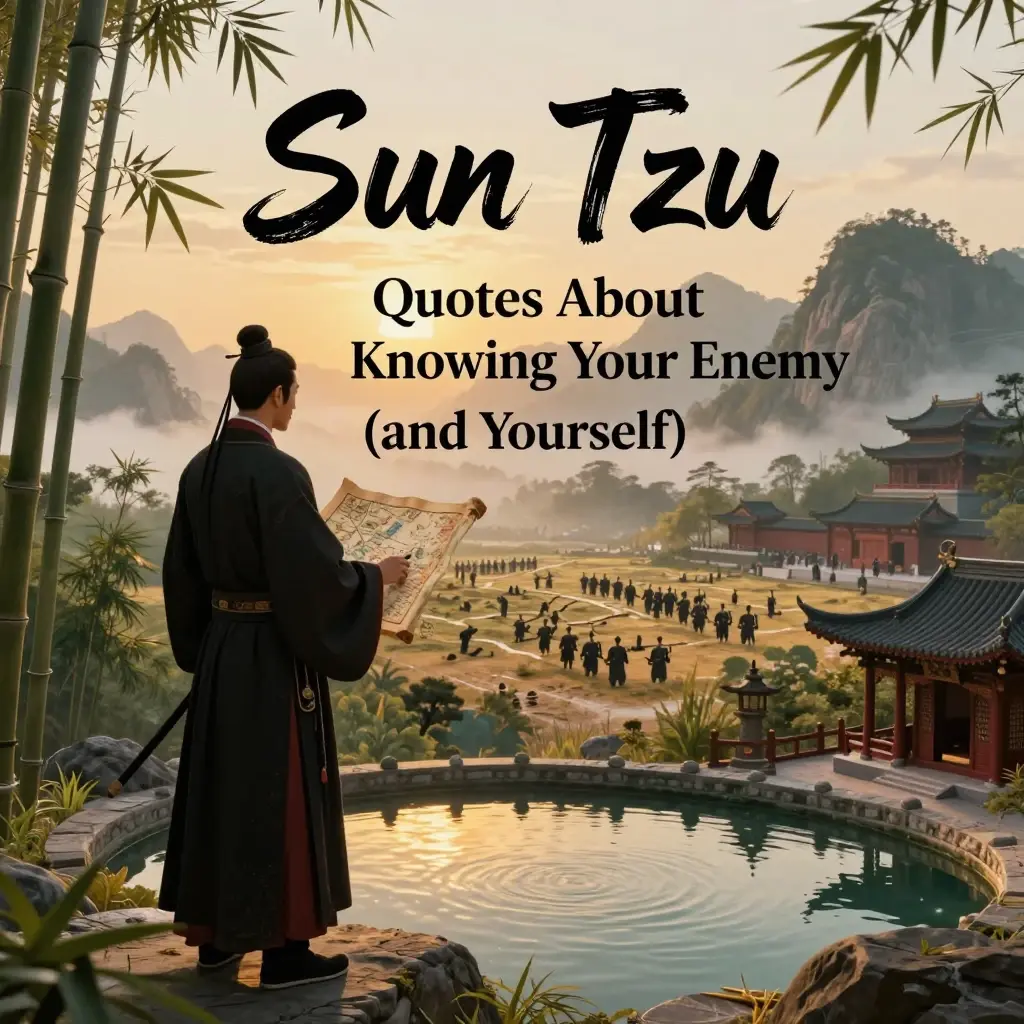
Beyond the single famous line, Sun Tzu returns to self-knowledge and opponent-knowledge repeatedly throughout the text. “If you know neither the enemy nor yourself, you will succumb in every battle” is his blunt warning about what happens when both are ignored.
- 🪞 Self-knowledge without opponent-knowledge still leaves you exposed
- 🎯 Opponent-knowledge without self-knowledge breeds overconfidence
- 🧠 Sun Tzu ranked total ignorance as the worst possible strategic position
- 📊 Competitive analysis in business exists because of this exact warning
- 🕵️ Espionage chapters in The Art of War exist to solve the “know your enemy” half
- 💼 Companies that ignore competitor moves often get blindsided by disruption
- 🧘 In personal conflict, “know yourself” often means recognizing your own triggers
- 🏅 Scouting reports in sports are a direct descendant of this principle
- 🗣️ Negotiators research counterparts’ incentives before ever sitting at the table
- 📚 This idea predates modern game theory by over two thousand years
- 🔄 Self-knowledge changes over time, so Sun Tzu implied ongoing reassessment
- 🎯 Ignorance of self often causes leaders to repeat the same strategic mistakes
- 🧩 Ignorance of the opponent often causes leaders to underestimate real threats
- 💡 This is why “do your homework” remains timeless business advice
- 📉 Markets punish companies that misjudge both their strengths and competitors equally
- 🏆 Champions in any field tend to study film obsessively — of themselves and rivals
- 🧭 Balanced awareness, not paranoia, is the actual goal of this principle
- 🌐 Diplomatic failures are frequently traced back to misjudging an opposing nation
- 🎬 War movies often dramatize exactly this failure as the tragic turning point
- 🧵 It’s one of the few quotes that works identically in war, sport, and business
- 🌟 The full quote is more sobering than the popular shortened version suggests
Sun Tzu Quotes on Deception and Misdirection
“All warfare is based on deception” is one of Sun Tzu’s boldest claims, and it’s often misunderstood as an endorsement of dishonesty. In context, it’s really about controlling information and perception — showing strength where you’re weak, and weakness where you’re strong.
- 🎭 Deception in this context means managing perception, not lying to allies
- 🧠 Poker players apply this principle every time they bluff or slow-play a hand
- 💼 Companies sometimes delay product announcements to avoid tipping off competitors
- 🎯 “Appear weak when you are strong, appear strong when you are weak” is the key line
- 🏈 Play-action passes in football are a textbook example of tactical misdirection
- 🕵️ Sun Tzu dedicated an entire chapter to spies and controlled information
- 📊 Businesses use limited product releases to create controlled scarcity perception
- 🧩 Misdirection works best when the underlying strategy is genuinely sound
- 🎬 Heist movies lean heavily on this exact Sun Tzu principle for plot structure
- 💡 In negotiation, revealing your true walk-away point too early weakens your position
- 🔍 Counterintelligence as a modern field owes a debt to this chapter
- 🎮 Esports players disguise strategies specifically to prevent opponent adaptation
- 🧘 Personal boundary-setting sometimes involves not revealing every card at once
- 📉 Overexposing strategy to competitors is a common and costly business mistake
- 🏆 Chess grandmasters use deceptive move sequences to bait predictable responses
- 🌐 Diplomatic negotiations often involve calculated ambiguity, not outright deception
- 🧵 This principle is frequently cited (and misapplied) in toxic workplace politics
- 🎯 Ethical application focuses on strategic discretion, not manipulation of trust
- 💬 Marketing “teaser campaigns” are a modern commercial descendant of this idea
- 🧭 The goal is always advantage, not harm — a distinction often lost in pop culture
- 🌟 It remains one of the most quoted — and most misapplied — lines in the whole book
Sun Tzu Quotes on Adaptability and Flexibility
Rigid plans break under pressure. “Water shapes its course according to the nature of the ground over which it flows” is Sun Tzu’s metaphor for adapting strategy to circumstances rather than forcing a fixed plan onto changing conditions.
- 💧 Water finds the path of least resistance without losing its underlying nature
- 🧠 Adaptive leaders adjust tactics while keeping their core goals intact
- 📊 Agile business methodology borrows heavily from this exact philosophy
- 🎯 Sun Tzu warned that rigid strategies fail against unpredictable opponents
- 🏈 In-game adjustments by coaching staff reflect this water-like adaptability
- 💼 Startups that pivot successfully usually keep their mission fixed and methods fluid
- 🧩 Flexibility isn’t the same as having no plan — it’s having several ready
- 🕰️ Circumstances change faster than most fixed plans can account for
- 🎓 Military academies still teach this metaphor in modern strategy courses
- 🔄 Sun Tzu believed no formation or tactic should be used the same way twice
- 🧘 Emotional adaptability in personal conflict mirrors this exact strategic idea
- 📉 Companies that refuse to adapt to market shifts are frequently the ones that collapse
- 🏆 Elite athletes adjust in-game strategy based on real-time opponent behavior
- 🌐 Diplomatic flexibility often prevents small disputes from becoming larger conflicts
- 💡 “Formlessness” is the term Sun Tzu used for strategies too adaptive to predict
- 🎬 Underdog stories in film often hinge on out-adapting a rigid, stronger opponent
- 🧵 This idea directly influenced modern lean startup methodology
- 🎯 Predictability is treated as a weakness throughout the entire text
- 📚 Business consultants frequently cite this quote when advising on market pivots
- 🌟 Adaptability paired with clear goals, Sun Tzu argued, beats brute strength alone
- 🧭 The metaphor endures because water still behaves exactly the way he described
Sun Tzu Quotes on Leadership
Sun Tzu had strong opinions about what makes a leader worth following. “The general who advances without coveting fame and retreats without fearing disgrace, whose only thought is to protect his country and do good service for his sovereign, is the jewel of the kingdom” outlines a leadership standard built on duty over ego.
- 👑 Leadership, in his view, was measured by service, not personal glory
- 🧠 Leaders who fear blame tend to make worse decisions under pressure
- 💼 Modern executives who prioritize company health over personal image build more trust
- 🎯 Sun Tzu believed leaders should absorb responsibility rather than deflect it
- 🏈 Coaches who protect players publicly (even after losses) build long-term loyalty
- 📊 Companies with ego-driven leadership show higher executive turnover on average
- 🧩 “The general who is skilled in defense hides in the most secret recesses of the earth” — humility as strategy
- 🕊️ Sun Tzu warned against leaders motivated primarily by personal reputation
- 💡 Servant leadership, a popular modern framework, closely echoes this ancient standard
- 🧘 Leaders who fear disgrace often avoid necessary but unpopular decisions
- 🏆 The best captains in sports history are frequently described in these exact terms
- 🌐 Political leaders praised for statesmanship often fit Sun Tzu’s leadership mold
- 📉 Reputation-obsessed leadership is repeatedly linked to organizational dysfunction
- 🎓 Leadership courses use this quote to distinguish authority from true leadership
- 🔄 Good leaders adapt their leadership style to their team, not the reverse
- 🧵 Sun Tzu also warned that overly cautious leaders create hesitant organizations
- 🎯 Balance between boldness and restraint defines his ideal commander
- 💬 Employees consistently rate “protects the team” leaders higher in trust surveys
- 🌟 This quote is frequently used in military leadership ceremonies today
- 🧭 Duty-driven leadership, he argued, outlasts fame-driven leadership every time
- 📚 It remains one of the most quoted leadership passages outside of Western texts
Sun Tzu Quotes on Timing and Patience
“He will win who knows when to fight and when not to fight” is a deceptively simple line about one of the hardest skills in strategy: restraint. Sun Tzu consistently argued that timing separates good strategists from great ones.
- ⏳ Knowing when not to act is treated as equally important as knowing when to act
- 🧠 Impulsive decisions in conflict are frequently the ones people regret most
- 📊 Investors who wait for the right market conditions often outperform impulsive traders
- 🎯 Sun Tzu believed premature action wastes resources that patience would preserve
- 🏈 Coaches who wait for the right moment to call a timeout can shift entire games
- 💼 Negotiators who let silence sit often extract better terms than those who rush
- 🧩 Patience isn’t passivity — it’s active waiting for the right conditions
- 🕰️ “Opportunities multiply as they are seized” is another line often paired with this one
- 💡 Startups that launch too early often burn out before the market is ready
- 🔍 Reading conditions accurately requires the same self-awareness discussed earlier
- 🏆 Athletes who “play the long game” in a season often outperform early sprinters
- 🌐 Diplomatic patience has prevented escalation in numerous historical standoffs
- 🧘 In personal conflict, waiting to respond calmly often produces better outcomes
- 📉 Companies that rush product launches frequently ship costly, avoidable mistakes
- 🎬 Sports movies frequently build entire third acts around this exact principle
- 🧵 Sun Tzu link timing directly to terrain, weather, and morale — not just instinct
- 🎯 Poor timing can turn a winning position into a losing one almost instantly
- 💬 “Read the room” as modern advice is essentially a plain-English version of this idea
- 🌟 Patience paired with preparation, not patience alone, is what Sun Tzu recommended
- 🧭 The hardest discipline in strategy is often simply doing nothing at the right moment
Sun Tzu Quotes on Terrain and Environment
Sun Tzu devoted multiple chapters to terrain, arguing that understanding your environment often matters more than raw strength. “He who knows the terrain and knows the enemy will never be defeated” ties environmental awareness directly to strategic success.
- 🗺️ Terrain, in modern terms, can mean market conditions, company culture, or timing
- 🧠 Ignoring “home field” dynamics is a common strategic blind spot
- 📊 Businesses that understand local markets consistently outperform those that don’t
- 🎯 Sun Tzu categorized terrain types and matched tactics specifically to each one
- 🏈 Home-field advantage in sports is a literal, modern version of this exact idea
- 💼 Companies entering new international markets without local insight often struggle
- 🧩 Environmental awareness includes understanding unwritten rules, not just geography
- 🕰️ Seasonal timing (a form of “terrain”) affects industries from retail to agriculture
- 💡 Sun Tzu warned specifically against fighting on ground that favors the opponent
- 🔍 Due diligence before market entry mirrors his terrain-scouting principle
- 🏆 Golfers who study a course beforehand consistently score better than those who don’t
- 🌐 Geopolitical strategy still accounts heavily for physical and cultural terrain
- 🧘 Understanding organizational culture before proposing change reflects this idea
- 📉 Ignoring cultural context has sunk numerous international business ventures
- 🎬 War films often show terrain mastery as the deciding factor in famous battles
- 🧵 Sun Tzu’s terrain chapter influenced centuries of military academy curricula
- 🎯 “Ground” that favors neither side requires different tactics than contested ground
- 💬 Modern sales teams “study the account” before a pitch — a terrain-scouting parallel
- 🌟 Environmental fluency, not just personal skill, was central to his definition of mastery
- 🧭 Even remote work strategy today accounts for “terrain” like time zones and culture
Sun Tzu Quotes on Opportunity and Speed
“Speed is the essence of war” reflects Sun Tzu’s belief that prolonged conflict drains resources and opportunity faster than almost anything else. Decisiveness, once the moment is right, mattered as much to him as patience did beforehand.
- ⚡ Speed after preparation, not instead of it, was his actual recommendation
- 🧠 Prolonged conflicts drain morale even when they don’t drain material resources
- 📊 Companies that move fast after validating an opportunity often capture more market share
- 🎯 “No lengthy war has ever profited any country” is a direct, blunt warning from the text
- 🏈 Fast-break offenses in basketball exploit exactly this speed-before-defense principle
- 💼 Startups that hesitate after finding product-market fit often lose ground to faster rivals
- 🧩 Sun Tzu treated indecision after preparation as a strategic failure, not caution
- 🕰️ Extended negotiations sometimes cost more in opportunity than they save in terms
- 💡 First-mover advantage in business is a modern echo of this ancient principle
- 🔍 Speed without preparation, however, was something Sun Tzu explicitly warned against
- 🏆 Sprinters and strategists alike know that hesitation at the start costs the whole race
- 🌐 Rapid humanitarian response often prevents small crises from becoming large ones
- 🧘 In personal decisions, prolonged indecision often causes more stress than the decision itself
- 📉 Companies famously lost market leadership by moving too slowly on emerging trends
- 🎬 Heist and thriller films build tension around this exact “window closing” urgency
- 🧵 Sun Tzu linked speed directly to morale — quick wins keep troops motivated
- 🎯 Decisiveness, paired with prior planning, defined his ideal commander
- 💬 “Strike while the iron is hot” captures the same idea in plain English
- 🌟 Long, drawn-out conflicts were treated as failures of strategy, not signs of strength
- 🧭 Sun Tzu’s speed principle remains one of the most cited in modern business strategy books
Sun Tzu Quotes About Preparation and Discipline
“Opportunities multiply as they are seized” pairs naturally with Sun Tzu’s broader emphasis on discipline — the daily, unglamorous work that makes decisive action possible when the moment finally arrives.
- 🏋️ Discipline is the unseen work behind every seemingly “lucky” strategic win
- 🧠 Sun Tzu believed well-disciplined forces required less brilliant leadership to succeed
- 📊 Companies with strong internal processes adapt faster during actual crises
- 🎯 Discipline creates the reliability that allows bold decisions to be made safely
- 🏈 Practice discipline is frequently cited by coaches as the real difference in close games
- 💼 Daily habits, not occasional bursts of effort, build sustainable competitive advantage
- 🧩 Sun Tzu ranked discipline among his five essential factors for military success
- 🕰️ Preparation done consistently removes the need for last-minute heroics
- 💡 “The good fighters of old first put themselves beyond the possibility of defeat”
- 🔍 Risk management in business mirrors this defensive-first discipline principle
- 🏆 Champions across sports consistently credit unseen, disciplined training over talent
- 🌐 Government agencies rely on disciplined protocols precisely for high-stakes moments
- 🧘 Personal discipline (routines, boundaries) mirrors the same strategic logic
- 📉 Organizations lacking discipline often collapse under pressure they should’ve survived
- 🎬 Training montages in film exist because audiences intuitively understand this principle
- 🧵 Sun Tzu treated discipline as more reliable than motivation, which fluctuates
- 🎯 A disciplined weaker force, he noted, can still outperform an undisciplined strong one
- 💬 “You don’t rise to the level of your goals, you fall to the level of your systems”
- 🌟 This idea, though phrased differently today, traces directly back to his teachings
- 🧭 Discipline is what makes opportunity usable instead of wasted
Sun Tzu Quotes on Weakness and Strength
Sun Tzu was fascinated by how apparent weakness could conceal real strength, and vice versa. “The whole secret lies in confusing the enemy, so that he cannot fathom our real intent” ties directly into how strengths and weaknesses can be deliberately obscured.
- 💪 Apparent weakness can be a deliberate trap for an overconfident opponent
- 🧠 Underestimating a “weak” competitor is one of the most common strategic errors
- 📊 Smaller companies often out-innovate larger ones precisely because they’re underestimated
- 🎯 Sun Tzu advised concealing true capability until the decisive moment
- 🏈 Underdog teams frequently win by exploiting an opponent’s overconfidence
- 💼 Startups sometimes intentionally stay quiet about capabilities to avoid competitive response
- 🧩 Strength revealed too early gives opponents time to prepare countermeasures
- 🕰️ Sun Tzu noted that even strong forces should sometimes feign weakness strategically
- 💡 “Pretend inferiority and encourage his arrogance” is one of his more direct tactics
- 🔍 Due diligence should never assume a quiet competitor is a weak one
- 🏆 Boxing strategists use feigned fatigue to bait opponents into overextending
- 🌐 Smaller nations have historically used perceived weakness to negotiate better terms
- 🧘 In personal conflict, projecting calm can be a strength even amid real difficulty
- 📉 Overconfidence rooted in underestimating a “weak” rival has ended entire companies
- 🎬 Underdog sports films are essentially two-hour illustrations of this exact concept
- 🧵 Sun Tzu warned that true strength shown too soon invites early countermeasures
- 🎯 Strategic humility, used correctly, is a genuine competitive advantage
- 💬 “Never underestimate your opponent” remains one of the most repeated sports clichés
- 🌟 This principle blurs the line between confidence and quiet, calculated patience
- 🧭 Real strength, Sun Tzu argued, doesn’t always need to announce itself
How Business Leaders Actually Apply Sun Tzu Today
It’s one thing to quote The Art of War on LinkedIn — it’s another to actually run a company by it. Several well-documented business strategies trace directly back to Sun Tzu’s principles, and looking at real examples makes the ideas far more concrete than the quotes alone.
- 🏢 Southwest Airlines famously avoided head-on competition with major carriers by serving underused regional airports — a “win without fighting” strategy
- 📱 Apple’s product launch secrecy mirrors Sun Tzu’s deception-through-information-control chapter almost exactly
- 🎯 Netflix’s early pivot from DVD rental to streaming reflects the water-shaping-to-terrain principle
- 💼 Amazon’s patient, multi-year investment in AWS before profitability echoes his timing-over-speed lessons
- 🧠 Toyota’s kaizen (continuous improvement) philosophy closely mirrors Sun Tzu’s discipline-first approach
- 📊 Procter & Gamble’s market research-heavy launches reflect his “know your terrain” emphasis
- 🏆 Nike’s brand storytelling, rather than direct price competition, reflects avoiding unnecessary “battles”
- 🌐 Many Japanese conglomerates explicitly cite Sun Tzu in internal strategy training
- 🧩 Startups using a “stealth mode” launch strategy are applying his deception principle directly
- 🔍 Competitive intelligence teams at Fortune 500 companies exist because of his espionage chapters
- 💡 Blue Ocean Strategy, a widely taught business framework, is essentially a modern retelling of “win without fighting”
- 🎬 Business case studies at top MBA programs regularly cite Sun Tzu explicitly by name
- 📉 Companies that ignored competitor terrain (like Blockbuster ignoring streaming) are cited as cautionary tales
- 🧘 Leadership coaching programs increasingly use his leadership passages verbatim
- 🏈 Sports franchises now employ “strategy consultants” whose frameworks trace back to this exact text
- 🧵 Consulting firms like McKinsey have referenced Sun Tzu in published strategy frameworks
- 🎯 His five-factor planning model appears, lightly modernized, in many business plan templates
- 💬 “Disruptive innovation” as a concept overlaps heavily with his indirect-attack philosophy
- 🌟 Executives increasingly cite The Art of War in interviews when asked about competitive strategy
- 🧭 The throughline across all these examples: strategy beats size, almost every time
Common Mistakes People Make When Quoting Sun Tzu
Sun Tzu gets misquoted constantly, often stripped of context in a way that flips his actual meaning. A few corrections are worth knowing before you drop one of these lines in a meeting.
- ❌ “All warfare is based on deception” is often used to justify dishonesty — Sun Tzu meant strategic information control, not lying to your own side
- ❌ “Keep your friends close and your enemies closer” isn’t actually in The Art of War at all — it’s widely misattributed
- ❌ Treating every quote as pro-aggression ignores his repeated emphasis on avoiding unnecessary conflict
- ❌ Using “know your enemy” without the “know thyself” half misses half the actual insight
- ❌ Assuming Sun Tzu glorified war ignores his opening line that war should be avoided whenever possible
- ❌ Quoting him purely for competitive ruthlessness skips his consistent warnings about the cost of prolonged conflict
- ❌ Applying “speed is the essence of war” without prior preparation misreads the full principle
- ❌ Ignoring translation differences — several popular English versions take real liberties with the original Chinese
FAQs:
What is Sun Tzu’s most famous quote?
“Know thyself, know your enemy. A thousand battles, a thousand victories” is the most widely cited line from The Art of War, often shortened to “know yourself, know your enemy.”
Did Sun Tzu really say “keep your friends close and your enemies closer”?
No. This line does not appear in The Art of War. It’s a popular misattribution, likely popularized by The Godfather Part II and later pop culture references.
What book are Sun Tzu’s quotes from?
Nearly all of Sun Tzu’s quotes come from The Art of War (Sun Tzu Bing Fa), a thirteen-chapter military strategy text believed to have been written in the 5th century BCE.
Was Sun Tzu a real historical person?
Historians are divided. Some believe he was a real general in the Wu Kingdom; others argue “Sun Tzu” represents a compiled tradition of strategic writing from multiple contributors over time.
Why do business leaders quote Sun Tzu so often?
Because his core ideas — preparation, timing, self-awareness, and avoiding unnecessary conflict — translate directly to competitive business strategy, negotiation, and leadership.
What does “know yourself, know your enemy” actually mean in practice?
It means accurately assessing your own strengths and weaknesses alongside a clear-eyed view of your competition, rather than relying on assumptions or overconfidence in either direction.
Is The Art of War only about literal warfare?
No. While written as a military text, its principles are widely applied to business, sports, negotiation, law, politics, and personal decision-making.
What is the meaning of “the supreme art of war is to subdue the enemy without fighting”?
It means the most effective strategists win through positioning, preparation, and leverage — making direct conflict unnecessary — rather than through brute force.
How long is The Art of War?
It’s remarkably short — fewer than 6,000 Chinese characters across thirteen chapters, which is part of why it’s remained so widely read and quoted for over two thousand years.
What’s the best Sun Tzu quote for business or leadership?
“Victorious warriors win first and then go to war, while defeated warriors go to war first and then seek to win” is especially popular in business contexts, since it emphasizes preparation over reactive decision-making.
Are all popular Sun Tzu quotes accurately translated?
Not always. Because the original text is classical Chinese, different English translations vary, and some widely shared quotes are paraphrased or slightly altered from the original meaning.
Conclusion:
What makes Sun Tzu’s quotes endure isn’t mysticism or clever phrasing — it’s that they describe patterns of competition and decision-making that simply haven’t changed much in 2,500 years.
People still misjudge their opponents. Leaders still confuse activity with progress. Companies still rush when they should wait, and hesitate when they should move.
Whether you’re heading into a tough negotiation, trying to lead a team through uncertainty, or just trying to think more clearly about a conflict in your own life, Sun Tzu’s central message holds up:
know yourself, understand the terrain you’re standing on, and choose your battles with intention.
That’s not ancient military trivia it’s genuinely useful advice, as relevant in 2026 as it was in ancient China.
If one of these quotes stuck with you, don’t just save it apply it.
Pick the single idea that felt most relevant to what you’re facing right now, and let it shape your next decision.

Lily writes inspiring articles featuring motivational sayings, life lessons, and uplifting messages designed to encourage readers every day. She believes that powerful words can inspire positive change and lasting confidence.